Showing posts with label home. Show all posts

Saturday, May 25, 2024

What Sellers Should Expect - Bullet Points

This is the bullet-point version of a much more detailed explanation. This version highlights the entire process from your point of view. You can relax because you'll be informed, and I'll keep everything on track for you. Please read the longer section to understand each step.

Pre-listing video
       Let's Sell Your House! (8:34 minutes)
       Let's Sell Your House! (Detailed version - 18:29 minutes)
       Let's Sell Your House! (Brief version - 2:14 minutes)

1) First Meeting
• Sign listing agreement
• Determine needs and preferences
• Review comparable market analysis
• Determine timing and expectations
Extra actions: Time to Shop The Competition

2) Prepare house for Sale
• Declutter and remove personal items
• Stager evaluation
• Make professional photos
Extra actions: Paperwork, House Repairs, Pre-stage, Staging, Photos

3) Activate Listing
• Listing is Active on MLS
• Sign is installed
• Lockbox is on door
• Showing service is activated
Extra actions: Coming Soon, Behind the curtain

4) Start Marketing
• Print and digital marketing materials
• Unique property website
• Social media advertisements
• Open houses and broker's tour
Extra actions: Switch to active.

5) Offer received
• Pre-qualify buyer and lender (if any)
• Negotiate seller's terms
• Call for Best & Highest offers
• Review breakdown of offers
• Accept offer
Extra actions: Negotiations, Offer accepted, Invitation to Submit New Offer, Time to Buy

6) Contract Executed
• Earnest and Option Fee deposited
• Property inspected
• Repairs negotiated (if any)
Extra actions: More paperwork, Inspection, Repair negotiations

7) Loan and Underwriting
• Lender approves buyer's loan
• Appraisal ordered by lender
• Rep provides comparable analysis to appraiser for consideration
• Loan evaluated
Extra actions: Appraisal, Closing Date

8) Pre-closing Steps
• Loan approved
• Closing Disclosure (CD) issued
• Title company balances with lender and gets loan documents
• Closing appointment set
Extra actions: Closing Disclosure (CD)

9) Closing and Funding
• Final walkthrough of the house
• Details of key exchange
• Sign closing documents
• Funding
• Termination of utility services
Extra actions: Final Walk Through, Closing Day! Release Keys and Remotes, Utilities, Funding

I've Got Your Six!

Mark M. Hancock, GRI, MRP, AHWD
REALTOR, New Build certified
214-862-7212
DFWmark.com

#DFWmark #REALTOR #Listing #Sellers #SellMyHouse #presentation #BulletPoints #sequence #RealEstate #VeteranOwned

Monday, March 28, 2022

710 Emerald Sound Blvd Slideshow

710 Emerald Sound Blvd.
Oak Point 75068
Offered at $650,000
MLS# 14755249

This 2,971 sq.ft. home has 4 bedrooms, 2.1 baths, 2-car garage attached with separate detached 2-car garage/workshop, 2 living rooms, dining and breakfast rooms, game room, fireplace, screened patio, spacious barn-style shed on a full acre of land.

Roof replaced March 2022. Screened outdoor living was completed in 2021. Enjoy the firepit, yard to romp and space to park RVs.

Kitchen has double oven, island, planning desk, walk-in pantry, and window bench. Formal dining and parlor are great for entertaining or convert into a relaxed home office. Downstairs is complete with a powder room, utility room and large family room with a fireplace.

Upstairs, primary suite can easily handle a Texas King bed, has walk-in closet, garden tub, separate shower and double sinks. Three bedrooms share a Hollywood bath with two separate sinks and vanities. The large game room can convert to a 5th bedroom, media room or super-sized office. Solar panel lease must transfer.

I’ve Got Your Six!

Mark M. Hancock, GRI, MRP, AHWD
REALTOR, Certified New Home Sales
214-862-7212 (call or text)
DFWmark@kw.com
DFWmark.com


#DFWmark #REALTOR #OpenHouse #house #home #OakPoint #DentonCounty #Acre #land #LargeYard #RVSpace

Friday, March 18, 2022

Coming Soon in Oak Point


Coming Soon!
710 Emerald Sound Blvd.
Oak Point 75068
Offered at $650,000
MLS# 14755249

This home has 4 bedrooms, 2.1 baths, 2-car garage attached with separate detached 2-car garage/workshop, 2 living rooms, dining and breakfast rooms, game room, fireplace, screened patio, spacious barn-style shed on a full acre of land.

Roof replaced March 2022. Screened outdoor living was completed in 2021. Enjoy the firepit, yard to romp and space to park RVs.

Kitchen has double oven, island, planning desk, walk-in pantry, and window bench. Formal dining and parlor are great for entertaining or convert into a relaxed home office. Downstairs is complete with a powder room, utility room and large family room with a fireplace.

Upstairs, primary suite can easily handle a Texas King bed, has walk-in closet, garden tub, separate shower and double sinks. Three bedrooms share a Hollywood bath with two separate sinks and vanities. The large game room can convert to a 5th bedroom, media room or super-sized office. Solar panel lease must transfer.

I’ve Got Your Six!

Mark M. Hancock, GRI, MRP, AHWD
REALTOR, Certified New Home Sales
214-862-7212 (call or text)
DFWmark@kw.com
DFWmark.com

#DFWmark #REALTOR #ComingSoon #house #home #OakPoint #DentonCounty #Acre #land #LargeYard #RVSpace

Saturday, January 15, 2022

Texas Homestead Exemptions 2022

Homestead Exemptions remove part of your home’s value from taxation, protect against some creditors and more. In short, they lower your tax payment. Here’s what you need to know to claim your exemption:
* UPDATED to reflect 2023 increase.

• There is no fee to file through your county’s tax appraisal office. Don’t pay a company to do this for you.
• The home must be your principal residence.
• You must have a valid copy of a Texas driver’s license or identification card that matches the homestead address.
• Homestead exemption applications are due by April 30.
• Application for homestead exemption is available at the county appraisal district (CAD).
• You can now file for the exemption immediately after purchasing the home and obtaining Texas identification with that address to get a prorated exemption.
• Homestead owner must be an individual (not a corporation or business entity).
• If the individual lives in a dwelling, a homestead can be a separate structure, condominium or mobile home located on owned or leased land.
• You only need to file once unless you move or get a notice from the chief appraiser.

Additional information from Designated Title
Starting January 2022, Texas homeowners who qualify for a homestead exemption will become immediately eligible to receive a property tax reduction when they purchase their property. Those buyers will receive the exemption allocated proportionally from the time they purchase the property. For example, if the buyer purchases the property in February, they will receive the homestead exemption on that year’s tax bill for February through the end of the year.

Texas homestead exemptions from counties, schools, cities, and special districts reduce the property taxes for the homeowner. The amounts vary from county to county. All Texas homesteads receive a $100,000 exemption on their home's value from school property taxes. Other local entities, like cities and counties, offer a separate residence homestead exemption. A homestead exemption can typically save a homeowner 10% to 20% on their property taxes.

Take Advantage of Homestead Exemptions from the Texas Comptroller

One of the easiest ways a homeowner can lower his or her property tax bill is to file a homestead exemption. A homestead is generally the house and land used as the owner’s principal residence on Jan. 1 of the tax year.

Homestead exemptions reduce the appraised value of your home and, as a result, lower your property taxes. To apply for an exemption on your residence homestead, contact the (NAME) Appraisal District.

Available homestead exemptions include:
• School taxes: All homeowners may receive a $100,000 homestead exemption for school taxes.

• County taxes: If a county collects a special tax for farm-to-market roads or flood control, a homeowner may receive a $3,000 homestead exemption for this tax.

• Age and disability exemptions: Individuals 65 or older or disabled as defined by law may qualify for a $10,000 homestead exemption for school taxes, in addition to the $40,000 exemption available to all homeowners. Also, any taxing unit may offer a local optional exemption of at least $3,000 for taxpayers age 65 or older and/or disabled. Older or disabled homeowners do not need to own their homes on Jan. 1 to qualify for the $10,000 homestead exemption. They qualify as soon as they turn age 65 or become disabled.

• Taxing units may offer a local option exemption based on a percentage of a home's appraised value. Any taxing unit can exempt up to 20 percent of the value of each qualified homestead. No matter what percentage of value the taxing unit adopts, the dollar value of the exemption must be at least $5,000.

• Partial exemption for disabled veterans: Texas law provides partial exemptions for any property owned by disabled veterans, surviving spouses and surviving children of deceased disabled veterans. This includes homesteads donated to disabled veterans by charitable organizations at no cost or not more than 50 percent of the good faith estimate of the homestead’s market value to the disabled veterans and their surviving spouses. The percentage of service-connected disability determines the exemption amount.

• 100 Percent Residence Homestead Exemption for Disabled Veterans: A disabled veteran awarded 100 percent disability compensation due to a service-connected disability and a rating of 100 percent disabled or of individual unemployability from the United States Department of Veterans Affairs is entitled to an exemption from taxation of the total appraised value of the veteran's residence homestead. Surviving spouses of veterans who qualified for this exemption or who would have qualified for this exemption if it had been in effect at the time of the veteran’s death are also eligible with certain restrictions. The residence homestead application must be filed if this exemption is claimed.

• Surviving Spouses of Members of the U.S. Armed Services Killed in the Line of Duty: The surviving spouse of a member of the U.S. armed services who is killed or fatally injured in the line of duty is allowed a 100 percent property tax exemption on his or her residence homestead if the surviving spouse has not remarried since the death of the armed services member.

• Surviving Spouses of First Responders Killed in the Line of Duty: The eligible surviving spouse of a first responder killed in the line of duty is allowed a 100 percent property tax exemption on his or her residence homestead if the surviving spouse has not remarried since the death of the first responder.

For more details on homestead exemptions, contact the Central Appraisal District (CAD) at the links below. The homestead exemption application is available online at:
comptroller.texas.gov/forms/50-114.pdf

 
You may file an exemption with your appraisal district for the homestead exemption up to two years after the taxes on the homestead are due. Once you receive the exemption, you do not need to reapply unless the chief appraiser sends you a new application. In that case, you must file the new application. If you should move or your qualification ends, you must inform the appraisal district in writing before the next May 1st. A list of appraisal district addresses and phone numbers is available online.

These are the Comptroller links to DFW counties:

Collin, Dallas, Denton, Ellis, Johnson, Kaufman, Rockwall and Tarrant

* Many counties allow the exemption to be filed via email.

I've Got Your Six!

Mark M. Hancock, GRI, MRP, AHWD
REALTOR, New Build certified
214-862-7212
DFWmark.com

Friday, September 3, 2021

HOA Laws are Changing in Texas

Texas REALTORS reports:

"Texas REALTORS® proudly supported these pro-consumer changes.

New REALTOR®-supported laws passed in 2021 bring more balance between the rights of property owners and their property owners’ associations. At least 6 million Texans are estimated to live in communities governed by property owners’ associations. This number will only increase as new communities are built across the state to meet the needs of our growing population.

Property owners’ associations are often necessary to create new housing, and they typically add value to the communities they serve.

Property owners’ associations also have significant power over people’s homes and their communities, and it is appropriate for the Texas Legislature to ensure that that power is executed with care.

The passage of monumental HOA reform legislation wouldn’t have happened without Texas REALTORS®. During the legislative process, members advocated on behalf of homeowners and homebuyers to show lawmakers the scope of the issues being faced.

Texas REALTORS® sent representatives more than 12,500 messages supporting the bill—a record-high call-for-action response!

In addition, the website MyHOAStory.com has been a great tool for collecting real-world stories from homeowner and REALTORS® about challenges they’ve faced with HOAs.

Following are changes made by Senate Bill 1588 that are effective on Sept. 1, 2021.

• FEES ARE CAPPED for subdivision information ($375), resale certificates ($75), and updated resale certificates ($75).

• TREC will create a publicly accessible CENTRAL DATABASE OF TEXAS HOAS by Dec. 1, 2021. HOAs that have filed management certificates in county records before Dec. 1, 2021 are required to file with TREC by June 1, 2022.

• HOAs are required to MAINTAIN WEBSITES with management certificates and meeting information and notifications.

• HOAs are required to FILE DEDICATORY INSTRUMENTS WITH THE COUNTY and provide certain contact information on all dedicatory instruments and management certificates.

• Property owners have new PROTECTIONS FROM NEGATIVE CREDIT REPORTING when a fine or fee is in dispute, and HOAs payment plan before reporting delinquencies.

• Prevents some CONFLICTS OF INTEREST within HOA architectural review boards.

• HOAs are barred from requiring access to LEASE AGREEMENTS and are only allowed to request tenant’s contact info and lease beginning and end dates.

• HOAs are required to SOLICIT BIDS for any contract for services over $50,000.

• HOAs are barred from prohibiting certain POOL SAFETY ENCLOSURES, the installation of certain SECURITY MEASURES on an owner’s private property, or certain RELIGIOUS DISPLAYS.

• HOA boards are required to provide members with TIMELY NOTICE ABOUT MEETINGS.

• Improves DUE PROCESS IN DISPUTE RESOLUTION and provides additional legal avenues when seeking resolution from a dispute with an HOA."


I’ve Got Your Six!

Mark M. Hancock, GRI, MRP, AHWD
REALTOR, New Build certified
214-862-7212
DFWmark.com


#DFWmark #REALTOR #HomeOwnerAssociation #HOA #consumer #buyer #seller #leases #PowerShift #ResaleCertificate #DueProcess

Thursday, July 16, 2020

Construction 101 – Punch List

The Punch List phase of construction is conducted by the buyers along with the construction manager. It is informally known as a "blue tape inspection." It occurs a few weeks before closing to address any errors well before move in.
Photos © Mark M. Hancock / DFWmark.com
By Mark M. Hancock / DFWmark.com

This post is part of the New Build Construction 101 series, which includes: Pre-pour, Mechanical, Punch List (this post), plus a bonus Pre-Closing Walkthrough for new homes.

If you're interested in a new-built house, I'd strongly suggest these two posts too: Want to Buy a New-Built House?, New-Build Home Basics


Inspecting a new home
Many builders have an informal buyer walkthrough for a “punch list” with the builder or project manager shortly after the private inspection. The punch list ensures all items that need attention are addressed before closing.

A punch list is a list of problem items or errors to repair or replace. Essentially, it is work that remains to be done.
Historically, contractors would pierce or punch a hole in the repair document to indicate the work was completed.

The punch list inspection is informally called a “blue tape” inspection. The buyer and builder or project manager inspect the property together and place pieces of blue painter’s tape on any found errors. Afterward, repair crews can locate and repair the problem or error.

Who handles the warranty?
The builder’s goal should be to keep quality high while minimizing cost. It’s the Buyer’s job to ensure the builder didn’t sacrifice quality for savings. Once the Buyer signs the final walkthrough (acceptance) form, they have accepted the property “As Is.”

Ask the builder, “how does your warranty work?”


Many builders support their own warranties. Other builders will support the warranty for two years and then hand off to a warranty contractor. Meanwhile, some builders are eager to hand off the warranty responsibility at closing to a third-party warranty contractor. If it will be a handoff, it’s best to know this before the final walkthrough because it becomes vital that all repairs are complete before closing.

Builders must pay up front or at the end of the warranty for any errors. It’s best and cheaper for the builder to deliver an error-free product.

That said, a third-party contractor sometimes has very little motivation to spend any money or effort to repair a “new” house. Consequently, they may delay repairs to the end of the warranty period in the hope that it will be forgotten until after the deadline.

Meanwhile the builder will spend time and money to complete any repairs and keep the closing on track. In short, don’t close until all promised work is done. Trust, but verify.

Company quality inspection
Before we continue, please understand that builders can’t deliver a perfect house. Quality is a continuum with no absolute “perfect.” The builders should always want “good” to “great” houses.

The first 95% of a house is easy to construct. The last 5% is the hard part because it is so detailed. Some companies use a quality control inspector to check each house. Quality builders expect to have the builder’s representatives present in every house every day and looking for problems.

When the inspector arrives, the house must be clean and ready for inspection. If the house isn’t ready to be inspected, they won’t inspect because a partial list won’t work. It is normal to have about 150-200 items on a checklist for the final quality inspection.


Just like any home improvement project, nobody notices when an issue is repaired properly. However, it is obvious to everyone when an issue isn’t repaired properly.

The only way for a company to protect its name is to ensure they catch the mistakes themselves. If the mistake is found by the inspector or the buyer, it’s already too late. The buyer will remember the problem existed rather than the solution.

A “B3 Walk” is a construction manager’s walk through. It’s named that because it’s B4 the homeowner. The construction manager wants to ensure everything is square, level, clean, etc. Once it passes the construction manager’s approval, it’s ready for the buyer.

While Inspecting
Inspect for quality. The punch list walk is like a mechanic letting you inspect after engine repairs. Most owners will notice a puddle of oil under the vehicle, but not much else.

Do not try to duplicate a third-party inspection. The third-party inspector is an expert who addresses code compliance. Buyers look for scratches, dents and gaps that the inspector may have ignored.

Procedure and Process
Be systematic. As you enter, keep your left shoulder on the wall and start walking and looking for errors. Look for level lines, square corners, screws completely seated, no nail pops (nail heads sticking out of a surface) on the ceiling or walls, lights align to each other and to nearby walls, no lumping caulk and neat paint touchup.

There will always be minor flaws if you examine any work with a flashlight in detail. The industry standard is for everything to look “normal” from a six-foot distance under normal lighting conditions.

Windows should be clean and work properly (smooth). Window locks should work.

Look along the wall. A quarter-inch deviation is allowed for each 30 inches of wall length. This tolerance is a specific standard. The walls can get crazy if builders don’t check for variance and ripples.

During construction, project managers look for bowing studs. There’s an internal framing punch to check before sheetrock is installed. The inspectors use a 6-foot-long level to help mark stud bows. Those studs must be shaved or replaced.

All trees are unique and have flaws. Lumber grades define the quality of lumber while it also estimates cost and waste expectations of the wood. Top builders use Grade 2 or Grade 1 lumber. Grade 1 is premium quality lumber. It is mostly used in visible areas of custom homes and accepts paint well. Grade 2 is industry-standard lumber. It has more and larger knots than Grade 1 while it also accepts paint well. No boards should have splits or knot holes.

Look back down the wall because light will change as the viewer’s angles change. Look for ripples, bowed walls and irregularities. From the builder’s point of view, if it isn’t a structural issue or visibly a problem, it’s OK.

The builder will need to make any repairs for structural problems found. If possible, walk through the house in the morning, noon, and evening to find different errors under different lighting conditions prior to the punch list walkthrough.

Shake doorknobs. Look inside the closets. Look for texture problems (those may hide bigger problems). Look for paint problems (missing in areas or splashed elsewhere). Ensure there are no “ghosting” doors – when an open door drifts on its own.

How does the walkthrough work?
Each builder is different. Be on guard for missing major items because it creates a chain reaction of other problems that lead to delayed closings.

If the house isn’t ready, don’t inspect. If a buyer inspects while items are stacked against the walls, those items may hide significant damage. It’s best to walk away and inspect a different day.

There’s a process to fix major problems. It may take time to fix because other things must be repaired first.

Do a full roundabout of the house first, and then look back at the overall view of each room for problems. Look for anything that seems out of place. If it looks wrong, it probably is wrong.

In the master bedroom, ensure fans operate properly and are balanced. Walls are straight. Windows work.

In the master bath, check the lights. Are they level and same height? Do the drawers move smoothly and close quietly? Do sink stoppers hold the water? Is there paint on the back of a medicine cabinet (bring a mirror to the inspection to check the back sides of items). They should be painted. Look under shelves.

Walk over the entire carpet of each room. Listen carefully for any noises and feel for loose carpet. Carefully listen when you step on each stair. Was there a squeak? Check again.

When looking at a big wall of windows, buyers want them to be straight, crisp and clean. Seams in the baseboard need to be flat. Look for wavy sheetrock around plugs. Look out the windows. How is the fence?

Any room that faces light needs to be visually inspected from both directions to ensure a defect isn’t covered by the glare of window light.
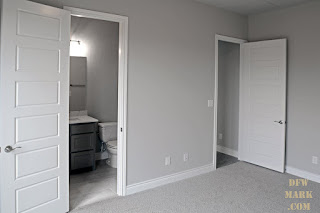
Check all doors. Ensure they move freely without “ghosting” to a specific position. Ensure they are square and don’t scrape anywhere.

Check the tile “lippage” - the height of one tile above the next on a flat plain. There should not be more than one credit card thickness difference between any two adjacent tiles. This ensures nobody hurts their feet on the floor.

Inspect for paint touchups. Look for mis-matched dots, spills or unpainted areas.

Look in the power panel and ensure it is clean and looks orderly. Ensure most of the slots are used with different breakers rather than “ganged” onto a few overloaded breakers.

Ensure the fireplace works and is level.

Check all the functions of the sink and its associated plumbing fixtures: faucet, handles, sprayer (all settings), disposal, leaks and smooth drainage.


Check each drawer for smooth operation. Ensure any “soft close” options were properly installed since the buyer paid extra for those options.

Custom cabinets can be realigned if they are not perfectly aligned. It can be fixed. The cabinet company is responsible to pad and adjust the doors. Ensure it’s done correctly or have it fixed immediately.

Check the caulk to ensure it is smooth and has no gaps or bumps.

Correct molding can cover significant problems. When there’s an obvious gap, it’s typically solved with molding. Test cooktops and vents and everything else mechanical in the kitchen.

Caulk maintenance
Everything in the house that isn’t made from petroleum products (plastic) is made from water. The house will dry out during the first year because the ideal interior humidity for health and comfort is around 30 to 50 percent.


Most builders leave sample paints for the buyers to make
touch ups later. Keep the lid to ensure future color matches. 
Materials are expected to shrink over time as those products dry into place. Builders don’t warranty caulk and paint. It is important that this is understood by first-time buyers and buyers who haven’t purchased a home in a long time.

Owning a home is work. Seams will need caulk. Paint will flake off. Hinges will squeak. The Sun and rain will damage the exterior each year. Get some basic tools to handle small projects such as removing and recaulking a corner seam or the seal around a window.

Iron doors
Be careful about scratches. It must be fixed fast because it will rust. Always check the powder coat and beware of metal on metal scratches (i.e. keys scraping against door).

Code plus inspection
Transparency is the key. Builders have no need to hide an error because it will be revealed later. Get builder to type up all repairs and sign the form.

Builders hire their own engineers. Third-party inspectors may suggest a repair, but they get trumped by the builder.

Communication
Expect weekly communication at a minimum. The builder’s representative will say, “I’m just calling to let you know where we are…”

Builders often have a Homeowners Log for each house. These detail calls and emails as well as the subject of those communications. Everybody is in the communication: builder, buyer and REALTOR to ensure no miscommunication.


Final checks and Warranty
Any engineering firm hired by the builder will have the final check list. New homes come with warranties of varying lengths. The warranty stays with the house.

When builders have completed all their sites in a subdivision, they will move to the next construction site. However, they will often handle warranty work through an arrangement with the closest available builder.

The builder will provide a contact sheet for different warranty vendors (plumbing, HVAC, etc.). When homeowners have a warranty problem, they should get a call within 24 hours of notification to inspect the problem.

Do NOT use an outside handyman to address warranty work without written authorization. An outside handyman voids the warranty. It MUST be repaired by builders or their designated vendors.

If it’s an emergency, DEFINITELY call the emergency numbers, and they will get someone to you.

As stated in the Pre-closing Walkthrough post, it’s an emergency if:
• It is below 45°F outside and the house loses heat.
• It the interior temperature exceeds 95°F when the A/C breaks.
• Loss of electricity to the house itself that doesn’t affect the neighborhood.
• Loss of water to the house itself that doesn’t affect the neighborhood.
• Leaks that require use of the water cutoff valve to stop water flow to the entire house. However, if the local shutoff for a sink or toilet will stop a leak, it is not an emergency and should be handled through the builder’s website.

Manuals and remotes typically are placed in one drawer in the kitchen.

You Are Ready!
If you’ve read this whole series, you’re ready to make the move to a new-built house. You have the right to have your best interests represented by a licensed REALTOR. The builder’s sales agent represents the builder – not you. The builder planned to pay a REALTOR fee. This cost is built into the purchase price. Don’t PAY for services that you don’t get! Contact a qualified REALTOR before you sign anything at the builder’s office. Otherwise, you possibly waive your right to no-cost representation.

DFWmark is certified as a New Home Sales Agent, Green Home Sales Agent in addition to having the Military Relocation Professional (MRP) and Graduate, REALTOR Institute (GRI) designations. I can ease the strain of finding your new-built home with my proprietary research information as well as help you liquidate your current house.


I’ve Got Your Six!

Monday, March 30, 2020

Construction 101 – Pre-pour

A concrete truck mixes its load as another truck delivers concrete during a foundation pour 
at Trinity Falls in McKinney on Nov. 18, 2019. (Mark M. Hancock / © DFWmark.com)
By Mark M. Hancock / DFWmark.com

This post is part of the New Build Construction 101 series, which includes: Pre-pour (this post), Mechanical, Punch List, plus a bonus Pre-Closing Walkthrough for new homes.

If you're interested in a new-built house, I'd strongly suggest these two posts too: Want to Buy a New-Built House?New-Build Home Basics

The Foundation
We’ll literally start this series at the foundation. Foundation technology has improved dramatically since the 1980s. From the 1970s to now, the science behind foundation and energy compliance has improved dramatically. All other aspects of home construction have remained relatively constant through the last half-century.
James Wrigg, project manager with Perry Homes, stands 
on a foundation pad at Trinity Falls in McKinney. 
(Mark M. Hancock / © DFWmark.com)
James Wrigg is a project manager with Perry Homes. Britton Homes is the luxury brand of Perry Homes. He oversees construction at Trinity Falls in McKinney where a 60’ lot with a greenbelt view retails for about $450,000 to $550,000 at the start of 2020. This series of posts is based on the Construction 101 class he teaches to real estate professionals.
Perry Homes does phase building. This means the homes are built and inspected in three distinct construction phases: foundation, mechanical (framing, electrical, HVAC, etc.) and finish (complete with drywall, flooring, lighting, appliances, etc.).
There’s always a project manager on site during the concrete pour because nobody wants a foundation failure. It must be correct, or it will be ripped up and done again at the builder’s expense.
The word “cement” is often used interchangeably with “concrete.” For accuracy, concrete is the completed formula or product. It contains an aggregate (such as gravel, rocks and sand), water and cement, which has a base of lime or other binder.
Slab-on-grade foundation
Many tract housing communities in North Texas have slab-on-grade foundations. These are also known as floating foundations. This process involves digging a mold into the soil, preparing the mold and essential infrastructure then pouring concrete into the mold for maximum efficiency of the concrete.
A foundation mold complete with tendons awaits a 
concrete pour. PVC plastic sheets trap moisture in the pad. 
(Mark M. Hancock / © DFWmark.com)
Developers have conditioned and built up the soil to make it as stable as possible. It’s the most important step due to the expansive clay soil of North Texas. These soils will expand and contract depending on the amount of water in the soil.
In North Texas, untouched soil is volatile. Builders want to trap moisture in the pad before the pour. Once the soil is completely swollen with water, a mold for the concrete beams is dug. PVC (Polyvinyl chloride) synthetic plastic is layered over the molded pad to keep soil swollen and avoid movement. The plastic is likely to outlive the house itself.
Once the house is built, it sits on the slab, which has a raft or grid of beams below it. As the soil dries in the summer, it pulls away from the beams. In the wetter months, the soil fills toward the beams but has already reached its maximum swell before the beams were poured. This safeguards the beams from being crushed by the expansive soil during wetter months.
Technical system
Post tension tendons are comprised of a plastic sheath, a
steel cable and grease. An anchor is nailed to the inside of 
the slab mold to allow tension to be applied to the cable later. 
(Mark M. Hancock / © DFWmark.com)
Post-tension slab technology was developed in the 1930s and is the main system now. It’s commonly used in areas with expansive soil or poor load-bearing soil. A post-tension slab spreads the weight of the structure over a wider area by using the slab itself. This weight distribution creates a smaller and less expensive foundation.
Post tension means tension is applied to steel cables in the foundation after (post) the concrete pour. A “tendon” is a plastic tube or sheath with a steel cable and grease inside. These are laid out in a specific pattern throughout the foundation.
The plastic sheath protects the metal from corrosive concrete and allows metal to be pulled while the grease lubricates the process and assists with rust and protection within the plastic tube. Anchors at each end of the cable hold it in place.
A boom concrete pump with an articulated robotic arm delivers
liquid concrete precisely during a pour in McKinney. A 3,600 
square foot slab requires about 110 yards of concrete. 
(Mark M. Hancock / © DFWmark.com)
A hydraulic tool applies 33,000 pounds of force per cable stretch. The allowance of exposed cable is 1.5 inches at each end. It’s vital the exposed cable is later protected from the elements to avoid corrosion and possible tension failure.
Builders must get everything right before the pour
Builders put minimal plumbing in the foundation. Ideally, only one line runs under the slab. All other lines are in the walls.
Repairs and renovations are inevitable. If repairs are encased in concrete, the costs explode. Often, builders feed metal pipes and electrical lines through PVC conduits (plastic tubes) to protect them from the corrosive cement and make future repairs simpler.
The drains and such are set by engineers before the mold was made. Drains, which are made from PVC, should outlive the house.
Metal post straps and hurricane clips ensure
structural integrity up to 90 MPH wind speeds.
(Mark M. Hancock / © DFWmark.com)
Metal post straps provide an anchor to tie onto the frame. The metal post straps are placed before the pour. Homes are built for 90 MPH wind speeds in DFW area with metal post straps that go down to the foundation.
A normal foundation pour takes about an hour to 90 minutes. However, the pour could take up to six hours depending on plan and size.
It takes about 110 yards of concrete to pour a 3,600 square foot slab. A yard of concrete costs about $103. Therefore, the concrete cost for a 3,600 sq. ft. slab would be about $11,330. The completed foundation costs about $30,000 to $40,000.
The foundation is one object, but it is made of both the beams and a slab. The beams are laid out in a grid pattern to support the slab. The slab is the flat, 4-inch top of the foundation. The slab has a minimum of 4 inches of concrete everywhere.
While the builder only needs to maintain 4” of slab, the remainder is for the support structure. The beams are each 10” wide and 30” deep. The grid of beams makes the foundation affordable and strong.
Builders don’t want the cables to weave. They need to be separated from each other in a continuous pattern. If they weave, they will put unwanted stress on the other tendons, and something will eventually break.
The 10-inch gap between the plastic-covered pad and the frame 
mold will become a 30-inch high concrete beam. The concrete 
slab will be 4 inches high atop of the beams and plastic.  
(Mark M. Hancock / © DFWmark.com)
Sheets of PVC plastic covers the soil. This method started in the 1990s. The plastic functions to keep the soil swollen with water until the foundation is poured and acts as a vapor barrier from the soil to the curing foundation.
Once poured, concrete cures for the rest of its life. The plastic keeps concrete from sucking water from below and causing mold under the flooring.
The grid of beams supports the slab as summer soil pulls away from the foundation. The foundation then rests on the beams with minimal flexing until moisture returns to the expansive soil.
The foundation benefits from the density of concrete compaction with the tensile strength of steel.
Expect corners to break off. It’s a cosmetic issue rather than structural.
When water is added to cement, a molecular change begins the cure process. The water initially fills the gaps between the cement molecules, which has an expansive reaction. As concrete cures, water leaves the capillaries, which can result in concrete being pulled in multiple directions. This evacuation leads to shrinkage cracks.
Workers spread liquid concrete quickly because cement 
begins a chemical reaction once it contacts water. 
As part of the cure process, cracks in the concrete are 
expected. Those cracks close when 3,000 PSI of pressure 
is applied to the post tension cables.
(Mark M. Hancock / © DFWmark.com)
From a homeowner’s perspective, the chemical nature of concrete necessitates cracks. Builders need enough water for the concrete to be workable and fully activated but not too much water that it weakens the chemical bonds. However that window of enough versus too much water is measured in many gallons rather than a few cups.
The owners will freak after the pour because there will be huge cracks in the concrete. However, the “shrinkage cracks” will heal when stressed by the post tension process. Cracks can’t be open afterward.
There are only two types of concrete:  cracked concrete and soon-to-be-cracked concrete. Assess which concrete is cracked and how seriously before reacting. A crack on the sidewalk is easily filled with silicone caulk, a hairline crack in the garage isn’t an issue. However, if a crack appears in the foundation that is 1/8th of an inch or more, it needs to be seen by engineers. A crack that is a nickel’s width is a problem.
If you see a crack from the ground up – it’s a problem. If there is major erosion of soil under the house, it is a big problem. Old foundations were flat and about 12” thick with no beams below the slab. If you can see the bottoms of those foundations, it’s a major problem.
Untreated redwood separates concrete sections. Driveways and
sidewalks use traditional steel rebar to reinforce the concrete.
(Mark M. Hancock / © DFWmark.com)
Untreated redwood separates the concrete sections. The driveway is 4” thick. Near the street, it is 6” deep.
Builders shoot for a slab that is as flat as possible rather than trying to build a drain angle. Tile wants a perfectly flat surface, but it’s unreasonable to expect a perfectly flat surface. Instead, a six-foot span should be within 1” of elevation change.
There are hundreds of gallons of water in a foundation. Rain on the foundation concrete is just cosmetic because the foundation will be protected by the structure. But the driveway needs to be poured on a dry day. If too much rain falls on the driveway concrete, spalling can occur.
Spalling is a condition where the concrete surface peels or flakes off. It’s caused when too much water is introduced during the curing process.
Once the concrete pour starts, it must keep pouring. The maximum allowable time between trucks is 45 minutes. Anything longer can create a cold joint. A cold joint is where new concrete is poured on cured concrete. Cold joints are failures and must be torn out and redone.
Hot weather is the biggest problem because it makes the concrete settle and cure faster. Foundation workers will effectively disturb and mix the poured concrete to keep it from curing until the next truck starts its pour. This ensures a homogeneous foundation.
Once poured, concrete cures at the following rates:
4 hours – can walk on it.
12 hours – can drive a nail into it.
45 days – can handle 2,000 PSI of tension (the Perry standard is 3,000 PSI).
For many decades, foundations consisted of steel rebar and
about 12 inches of concrete on unprepared soil. Post 
tension foundation techniques were developed in the 1930s. 
However, the steel available at the time wasn't up to the task.
Modern post tension foundations became the industry 
standard in areas with expansive soil or poor load-bearing 
soil during the 1990s. (Mark M. Hancock / © DFWmark.com)
Cylinder tests involve leaving concrete in a cylinder to cure on site. These are broken at different points to test the strength of the concrete.
A hairline crack is cosmetic. The post tension cable system ensures it won’t get wider.
If concrete sweats, it pulls moisture from below. It remains warm when the air above it is cool. When cool air contacts a warm surface in the presence of humidity, it creates condensation. The condensation creates the right environment for mold.
The post-tension pockets should be covered and maintained. Corroded cables can snap and severely damage foundations.
If the tendon cap falls off, it should be covered and sealed with hydraulic cement, which is a kind of grout. It’s suitable to repair masonry surfaces both above and below grade.

If you’re ready to make the move to a new-built house, you have the right to have your best interests represented by a licensed REALTOR. The builder’s sales agent represents the builder – not you. The builder planned to pay a REALTOR fee. This cost is built into the purchase price. Don’t PAY for services that you don’t get! Contact a qualified REALTOR before you sign anything at the builder’s office. Otherwise, you possibly waive your right to no-cost representation.

DFWmark is certified as a New Home Sales Agent, Green Home Sales Agent in addition to having the Military Relocation Professional (MRP) and Graduate, REALTOR Institute (GRI) designations. I can ease the strain of finding your new-built home with my proprietary research information as well as help you liquidate your current house.

If you plan to purchase a new-construction home, please read these other important posts:
Want to Buy a New-Built House?
New-Build Home Basics


Please watch for additional Construction 101 posts: MechanicalPunch List and Final Walkthrough.

I’ve Got Your Six!

Tuesday, March 10, 2020

New-Build Home Basics

Mark M. Hancock / © DFWmark.com
A new home is framed while under construction at
Trinity Falls in McKinney.
There are three basic categories of new-built homes plus custom homes.

1) From the dirt. The buyer gets to select everything including premium lots - at premium prices. These homes take the longest to build for major builders. The normal range is from three months for mass-produced, smaller homes to a year or more for luxury homes.
Premium lots are often larger, located on a corner (fewer shared boundaries), or have better views of water, woodlands or city views. The lot premium may eventually translate into a faster sale rather than more money at sale. However, the homeowner should enjoy the benefits of the premium lot during their residency. The builder pays a premium to the developer for those lots but may also apply a markup.
Buyers will need to anticipate a 10 percent total down payment plus 20 percent down for any upgrades throughout the process.

2) Structurally completed. This house is already a shell on a plot of land. The buyer doesn’t choose the home style or lot. The buyer may get to choose all the finishes and packages. Builders will include lighting, window and/or appliance upgrades to get buyers off the fence. It will take three months or more before it's move-in ready.

3) Inventory homes. This is a completed, move-in-ready home. It typically has some upgrades included to motivate buyers. The builder must pay the bank to keep them in inventory. Consequently, the builders want to move these homes fast and will offer additional incentives (appliance packages, etc.).
While most inventory and near-completion homes won't be in the MLS, some are. You can search for homes built in the current year or the previous year. Often, these same builders will have additional properties nearby in all phases of completion.

Upgrades
Builders add a markup to each upgrade. This creates a cost buffer for many builders. Consequently, they will encourage buyers to get lots of upgrades. When you’re considering upgrades, ask your Realtor to research after-market prices on these same upgrades.
Items such as lighting fixtures are relatively simple to change. Have the builder complete the electrical wiring but go with the base lighting option and upgrade later to save a little money. It’s important to remember that these upgrades are going into your mortgage and will have compounded interest until the entire home is paid off.
That said, real wood floors - often called “hand-scraped” - are almost always a good investment. The high-quality wood floors available from builders require time and successive layers of work. It’s best if this is done from the beginning. Attempting to add these floors after the home is built requires the removal and reset of all baseboards, re-leveling the floors, as well as sawing the bottoms off all affected doors. Few flooring companies will do this level of service when the home has residents and will charge hefty fees to do it.

Custom Homes
Custom homes are exactly what you want with no compromises. However, they are extremely expensive and require detailed decisions on literally every tiny part of the structure. Depending on the builder, they can also be slow to build because there is no automation for a unique structure on a unique piece of land.
The landowner must hire architects, engineers and specialists for each part of the construction. Nothing can move forward until the prerequisite step is completed. Additionally, labor and material costs can be volatile depending on the season and other market forces.
If you have the vision, time and finances to create a one-of-a-kind dream home, do it! However, understand what you’ll face before you start.

Model Homes
There may be some model homes mixed in with the inventory homes. If so, they will have a little wear and tear, but they will have tons of upgrades. Sometimes these upgrades are one-of-a-kind “test” features. They can be a great bargain if you appreciate the upgrades. For comparables, treat them more like preowned homes rather than new-built homes - although the builder will want to treat this heavily trafficked home as "new."

Protect Yourself
You need to read Want to Buy a New-Built House?. It lets you know how to leverage our brokerage to get a better deal and this major issue of caution: do NOT register at the builder without your agent present. Otherwise, you’ll probably lose your right to a no-cost Realtor, who will protect your best interests. While builders’ agents are pleasant and helpful to everyone, they are obliged to act in the best interest of the builder. Don't pay for services you don't get. You need someone to protect you.

I’ve Got Your Six!

Thursday, February 6, 2020

FREE Interactive Home Selector is Available


I look forward to working with you and making your transition as smooth as possible. Please email DFWmark@kw.com to get a FREE interactive PDF of the Home Selector form shown here. You can input and Save the information you add securely on your own computer.

You can fill it out for yourself to safely search on DFWmark.com or send me a completed copy to let me custom-deliver home options to your secure email inbox. Call, text or email me to get this form for lease home options.

If you prefer, you can download and print the Home Selector form from this page. If you're looking for a home, DFWmark.com is tied directly to the MLS (Multiple Listing Service), so you can be confident that you only see accurate, timely and safe options directly from the service professional REALTORS® use.
There are some posts on this blog designed for your convenience and peace of mind. You will want to start on the Index page. It has links to all the information you'll need to make informed decisions. The most important posts are these:

House Buyers:
What buyers should expect
Avoid scams
Your credit score and options
School district scores, schools and feeder patterns
 (select districts)
Who pays for what?

House leases:
What to expect when leasing a house
Avoid scams
Your credit score and options
School district scores, schools and feeder patterns
 (select districts)
Who pays for what?

I look forward to seeing what properties you have chosen. I'll investigate any multiple offer or application situations, arrange access and give you the route details for our private tour.

My services are almost always paid by the sellers to be at no cost to buyers and tenants. You need a trustworthy, full-time professional Realtor on your side to guide you through the process. I'm at your service.

Mark M. Hancock, GRI, MRP, AHWD
REALTOR, New Build certified
214-862-7212

Welcome to the DFWmark Blog!

Welcome to the DFWmark Blog! This is a collection of content by Mark M. Hancock, a REALTOR with Keller Williams North County in Celina...